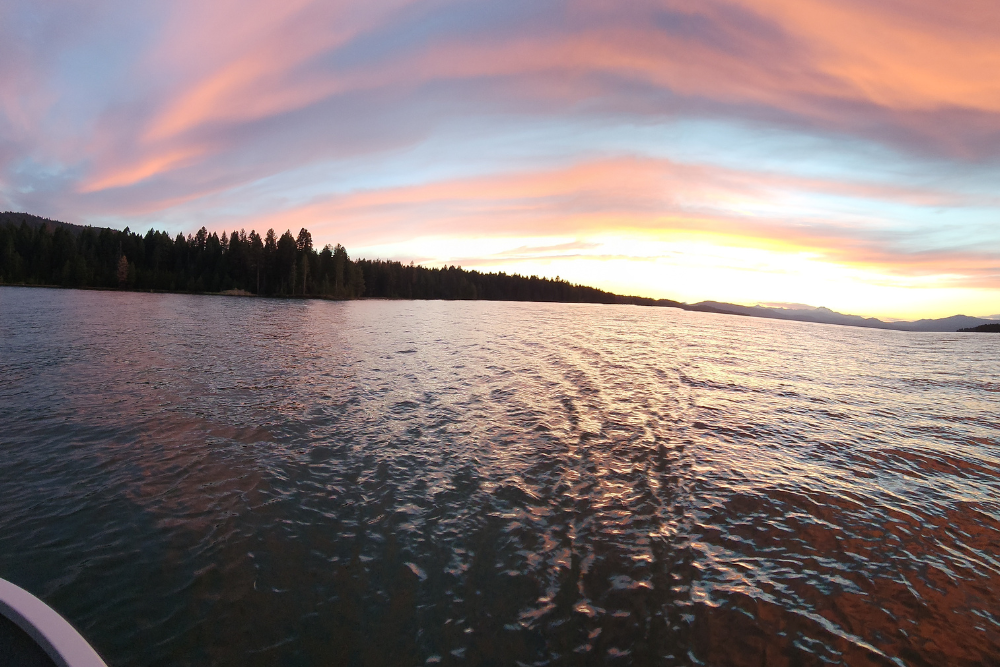

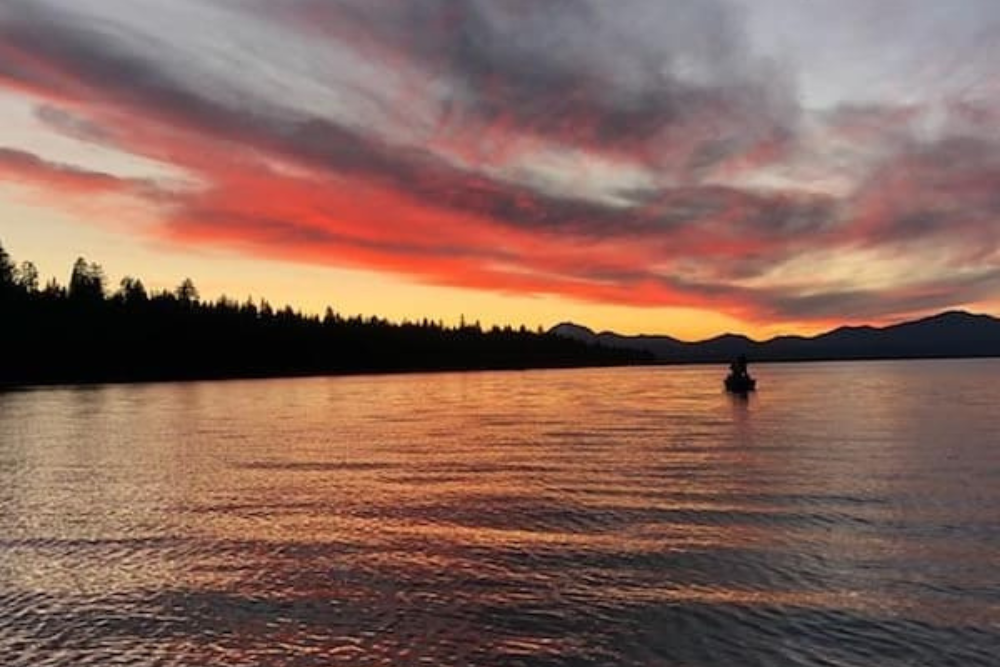
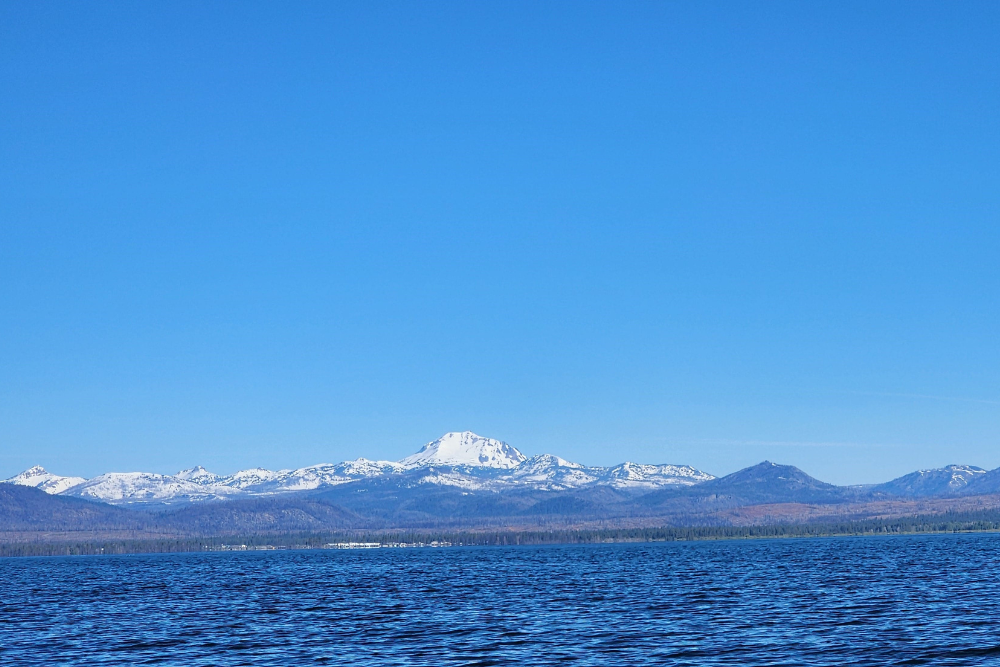
Tucked into the Northeastern Sierra’s, just 2.5 hours from Sacramento and 2 hours from Reno, sits a high-mountain gem named Lake Almanor. At 4,500 feet elevation in Plumas County, near Chester, California, this man-made lake lies in the scenic shadow of volcanic Mount Lassen. Originally known as Big Meadow, Lake Almanor was created in 1914 when the Great Western Power Company built Canyon Dam on the North Fork of the Feather River. Little did they know they had just built what would become one of Northern California’s premier trophy fisheries.
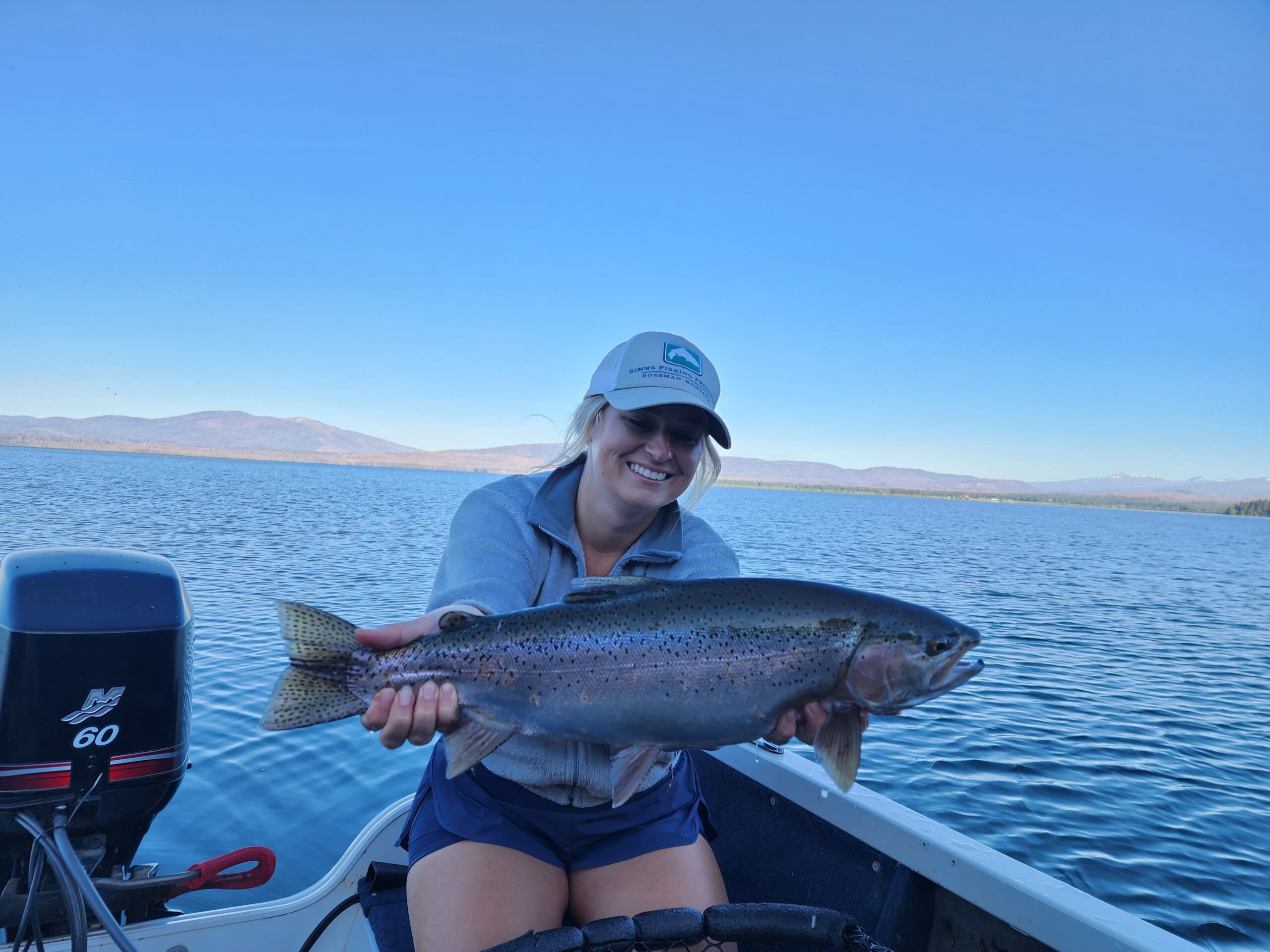
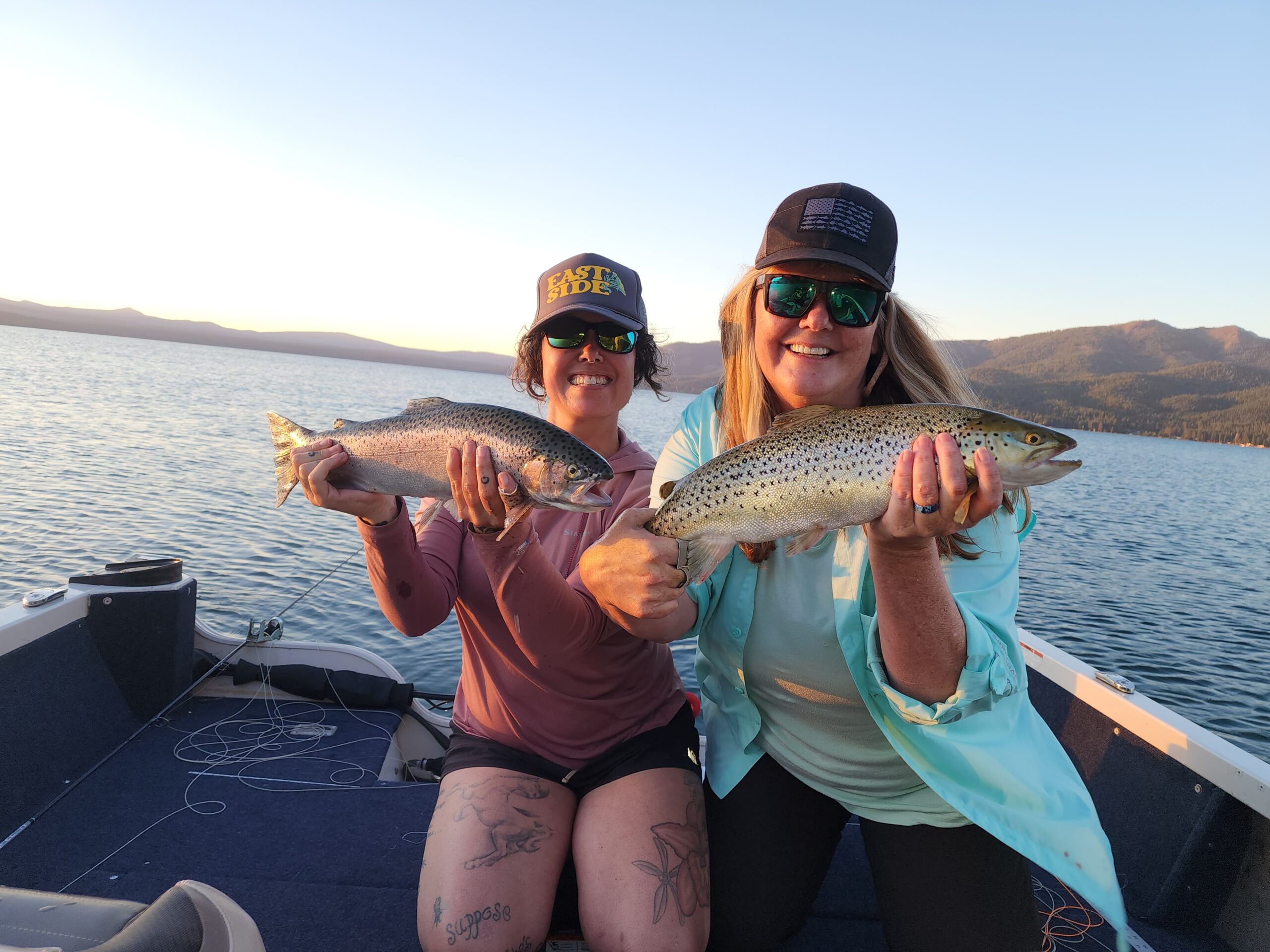
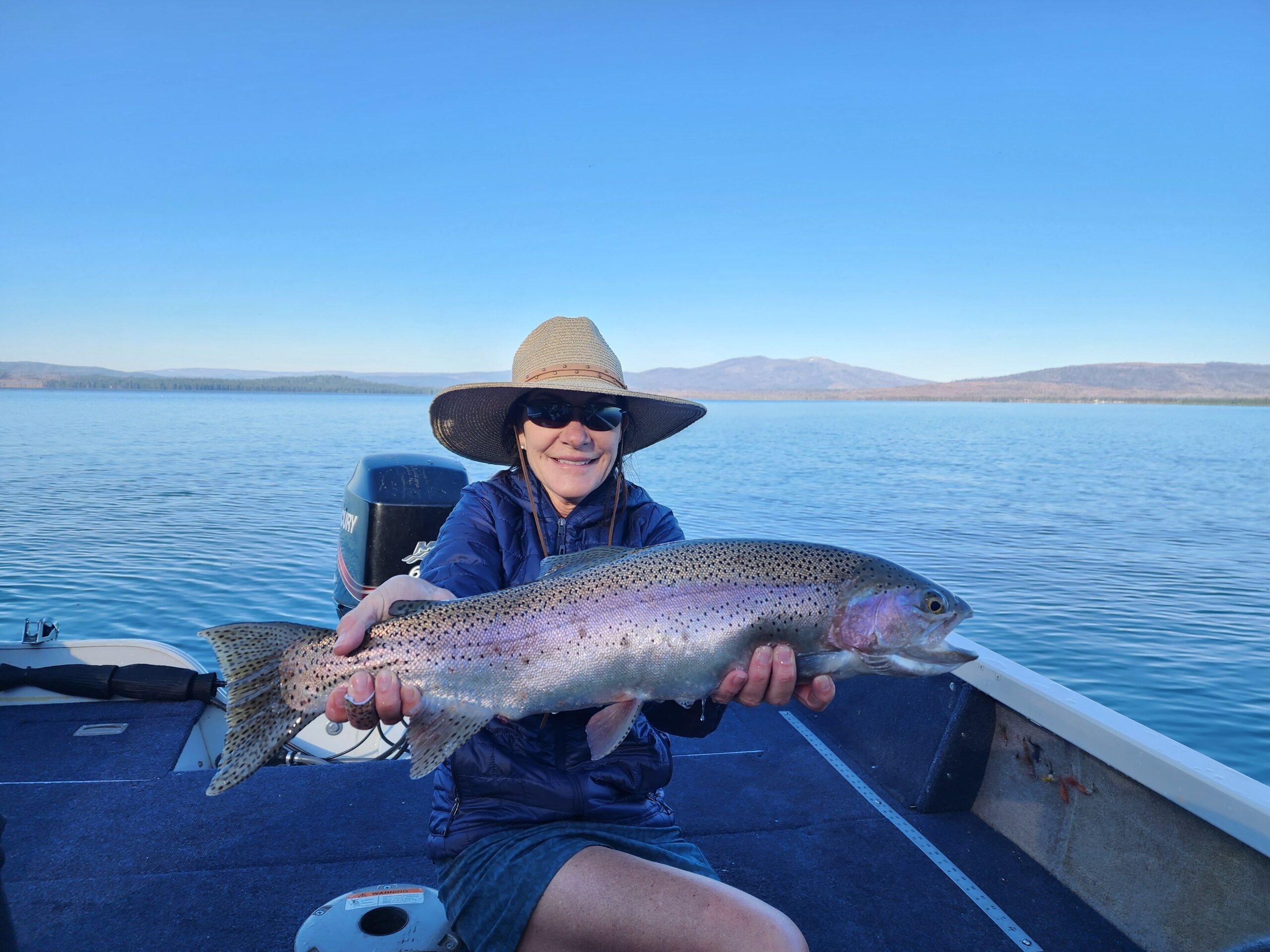
This is a lake of possibilities, where anything can happen and often does. While it is famous for its summer Hexagenia hatch, Lake Almanor offers many more hatches and opportunities. Anglers can chase a wide range of species throughout the year including trophy brown trout, trophy rainbow trout, trophy smallmouth bass, and landlocked Chinook salmon. Catching all four in one trip is known locally as the “Almanor Slam.” We also have a population of carp (a growing interest for fly anglers).
Lake Almanor is often pigeonholed as a summer Hex hatch destination. But for those who know where and what to look for it is a year-round fishery offering diverse action, wild surprises, and trophy opportunities that rival any in the West. Whether you are after a Smallmouth Bass on a fly, a trophy rainbow, or brown trout, or chasing the elusive Almanor Slam, Lake Almanor delivers.
Here is the breakdown of our seasons throughout the year:
Smallmouth Bass Season (March – April)
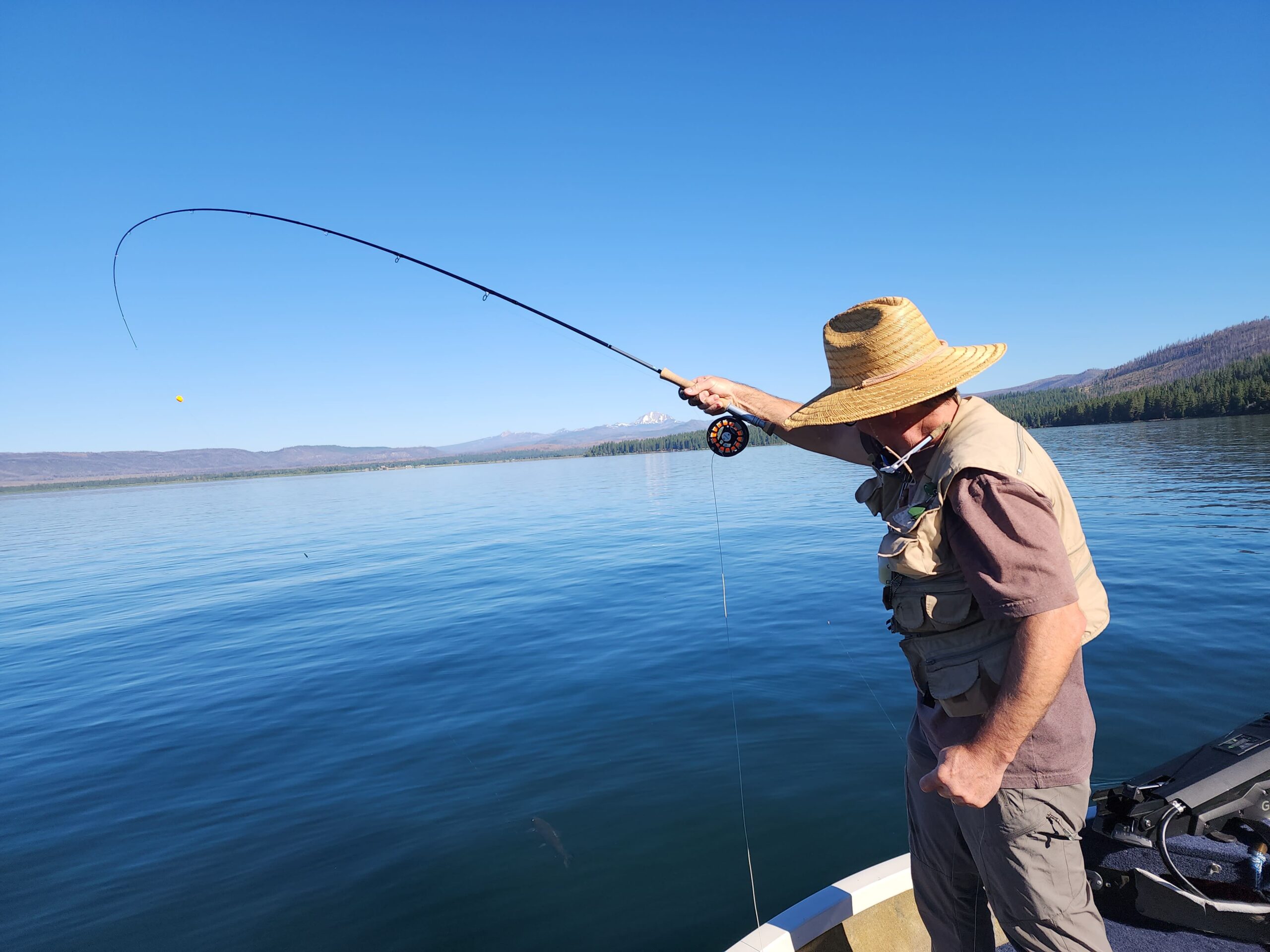
Starting us off we have a Smallmouth Bass season which runs from March through April sometimes into May depending on water temperature. I focus on pre-spawn and post-spawn. We target Smallies under an indicator drifting balanced leeches across long tapering points and in shallower coves. We also use an intermediate or type 3/4 full sinking line, stripping in streamers or jig flies that mimic crawdads or crawdad pieces. During certain seasons (summer and fall) we can use dry flies also.
Spring Chironomid Hatch (Late April – June)
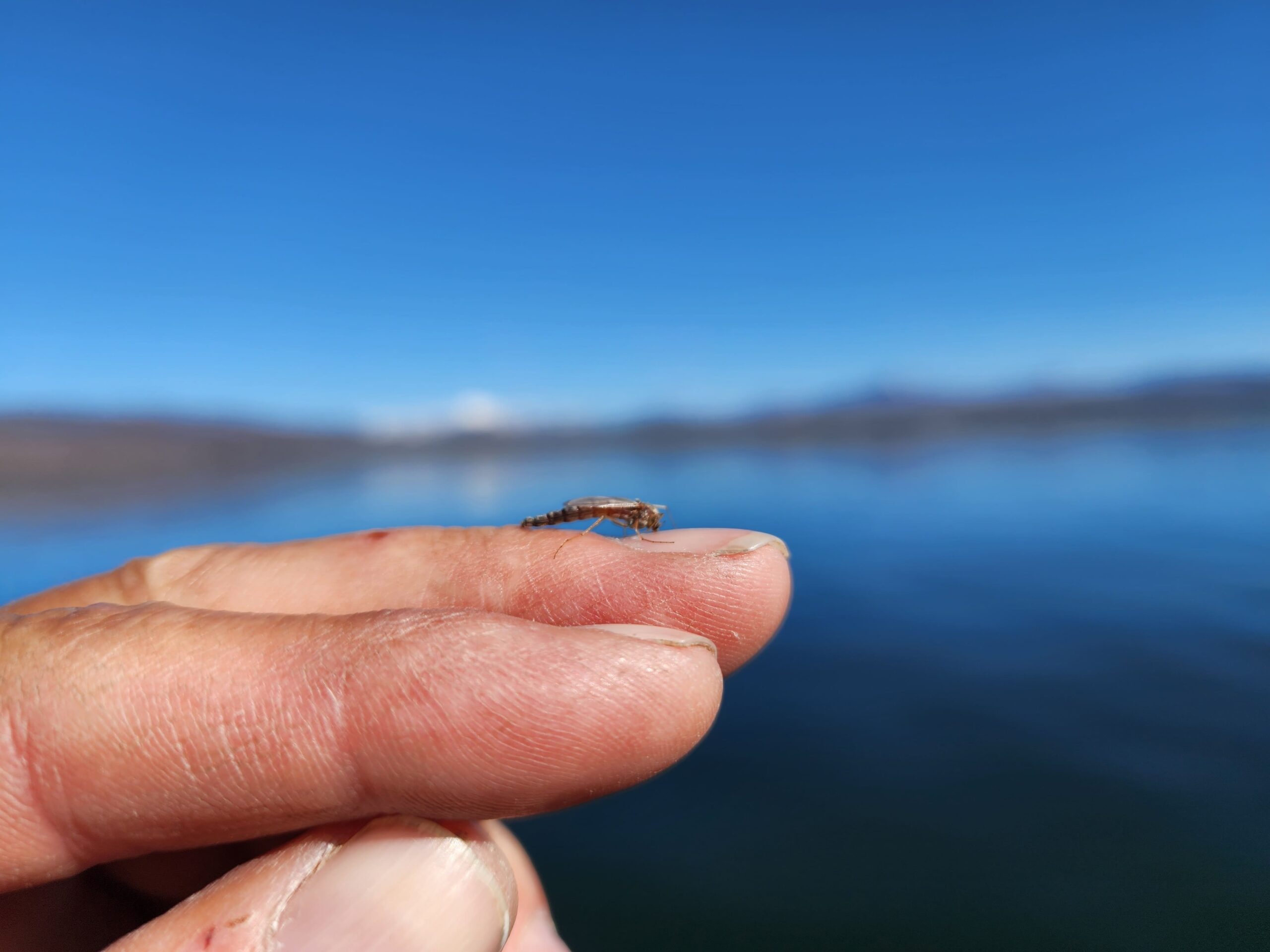
Next we have our Spring Chironomid or Midge season that begins at the end of April and continues through June. We target browns, rainbows, and smallies using an indicator with a double midge or midge and balanced leech setup. Or we use intermediate or full sinking setup with double midge. Occasionally we can throw dry flies to surface feeders.
Hex Hatch (Mid-June – Mid-July)
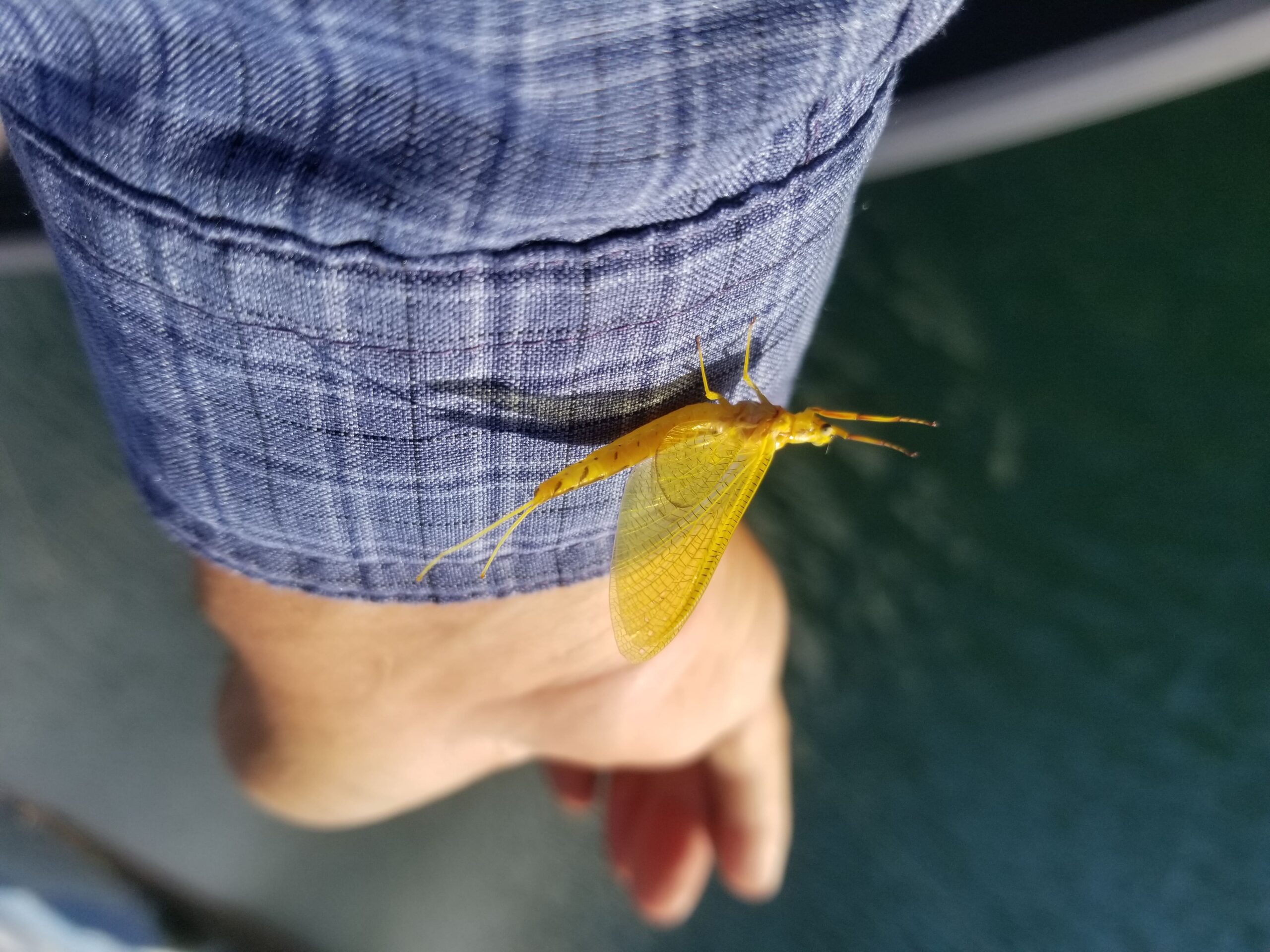
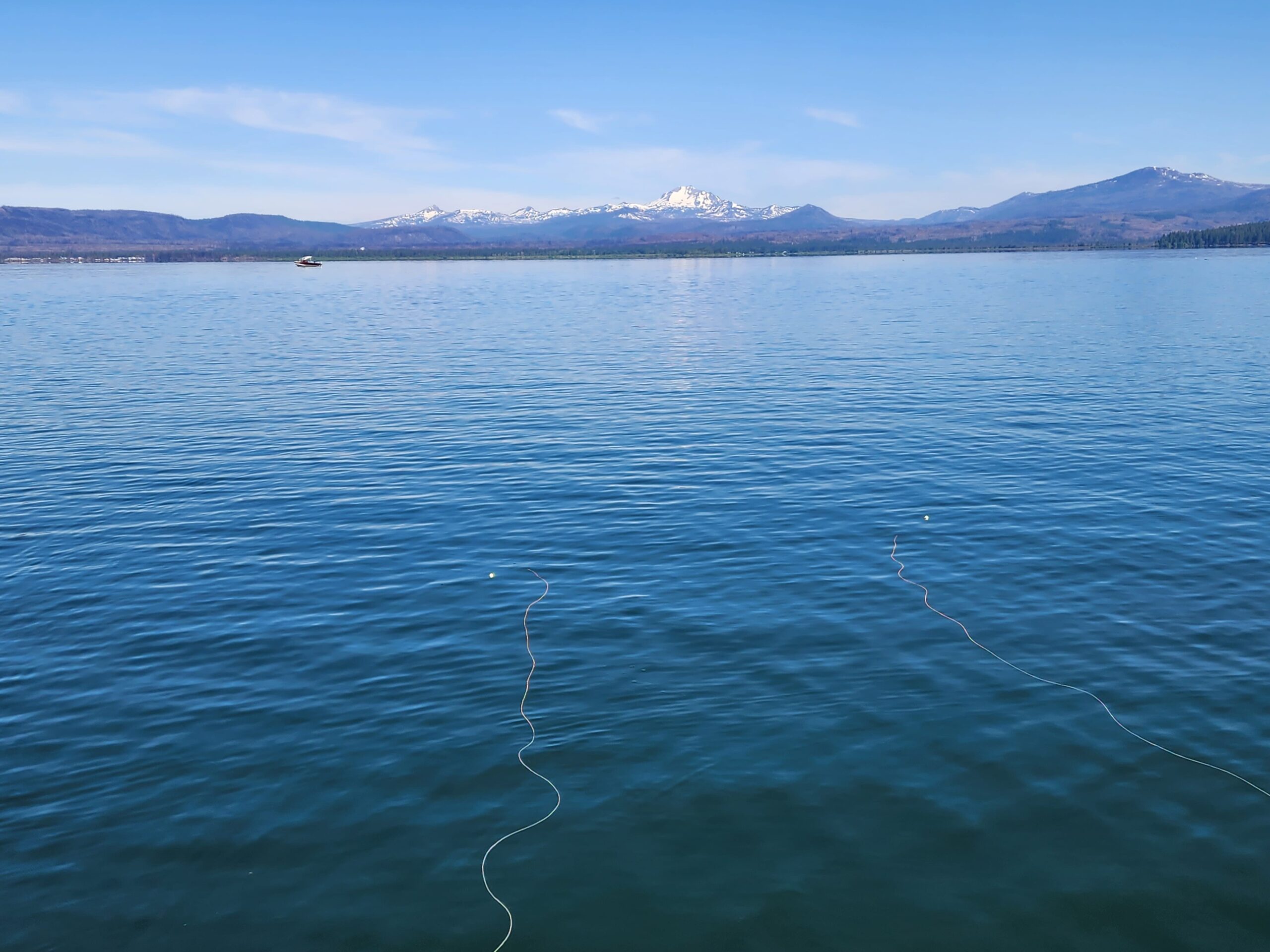
Starting around the second week of June and going into the second week of July, we have the Hexagenia Limbata season known as the Hex Hatch. This is a late afternoon early evening bite. However, we do have morning options available during this time. Again, we target fish using an indicator with balanced leech setup. We also use intermediate or full sinking lines with a slow retrieve. About 20 mins prior to sunset, we will switch to a dry dropper setup and fish until about 30 mins after sunset.
Summer Chironomids (July – August)
We have a Summertime Chironomid season that runs July through August, depending on how hot the water surface temperatures get. Same techniques as the early season Chironomid hatch.
Damselfly Hatch (June – August)
We have a Damselfly season that runs from June through August. It is often overshadowed by other hatches going on at the same time. Same still water techniques apply.
Floating Pond Smelt (March/April & September- November)
We have two Floating Pond Smelt seasons that happen in early Spring (March/April) and Fall (September to November). The Fall tends to be more popular, because our big browns feast on the smelt, looking to bulk up for their spawning run up the tributaries. As the smelt near the shallows to spawn, trout will school them into large bait balls. This creates an easy meal for brown trout, rainbow trout, and Smallies. We start with balanced leeches under the indicator, an intermediate or type 3/4 full sinking line stripping in streamers or jig flies that mimic pond smelt. As the pond smelt die, after they spawn, they will swim in circles towards the surface. This is known as the death spiral. Then they flutter around on the surface while they are giving up the ghost. This is another good time of year to catch a trophy fish on the surface using a floating pond smelt pattern.
Floating Leech Hatch (September – October)
There is also a floating leech hatch during September and October, which is also very productive on the surface, but it is overshadowed by the floating pond smelt. However, if the floating pond smelt is slow, we will switch to a floating leech.
Daphnia (Year-Round)
Daphnia or water fleas are in the system year-round. These guys spend most of their time around grass and vegetation. However, they have microscopic fan-like feet, they lock together with other Daphnia to form large clusters. These clusters then float freely throughout the water column and make a delicious meal for all species of fish. Balanced leech under an indicator is our go-to method.
Winter Season (December – February)
Even though hatches slow down November through February, Lake Almanor can still fish. Hatches might slow down, but fish still need to eat. We use the same Stillwater techniques but slower, and patience is crucial, but the rewards are still there. We look towards springs and river inlets in search of fish. One particularly large spring fishes well in the wintertime. Eagle Lake, which is nearby, is also an option for Wintertime.
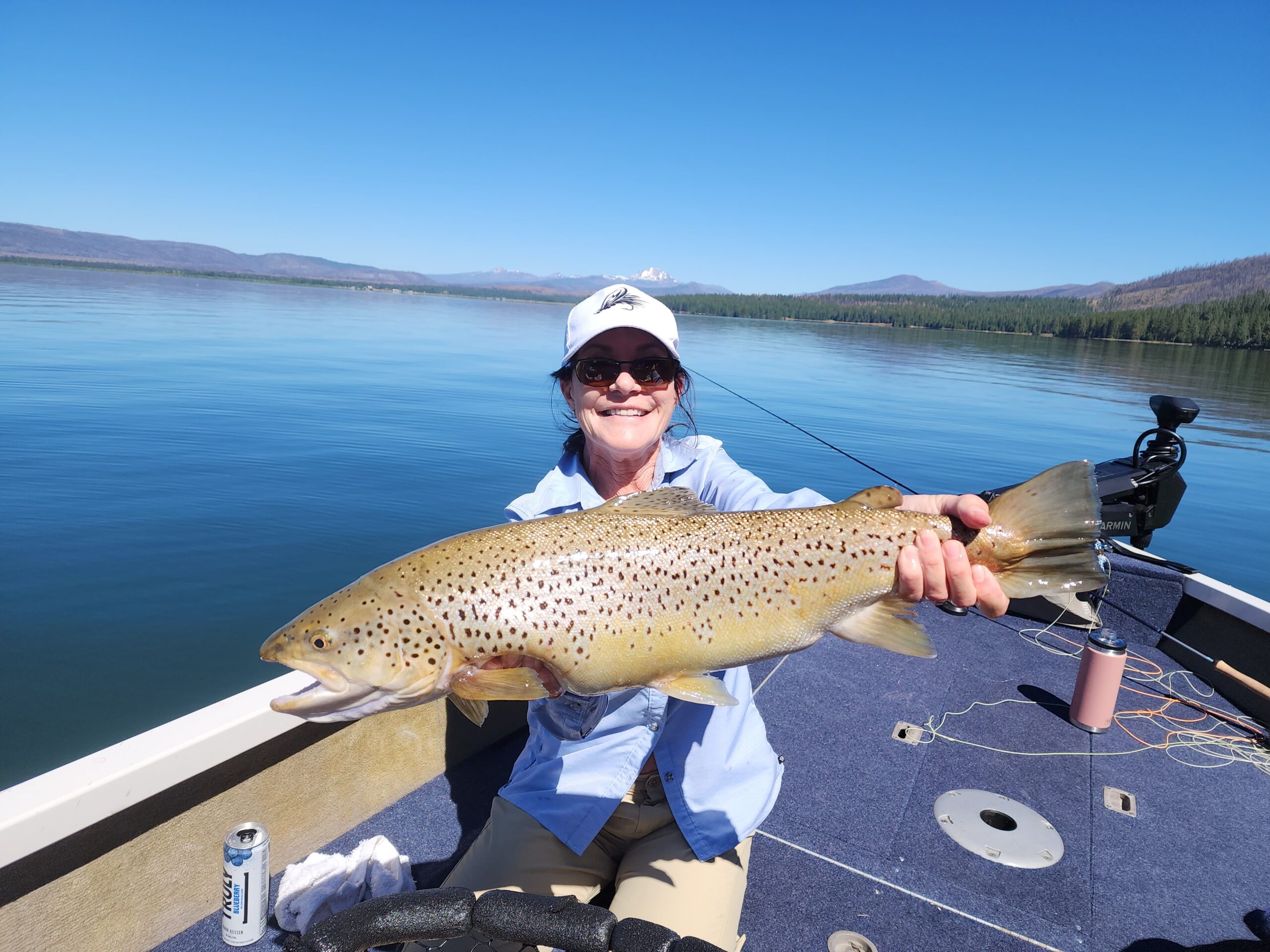
Techniques:
If you are starting to see a common theme here with the techniques, that is because these are my tried-and-true methods. About 10 years ago my good friend Mark introduced me to some more advanced techniques when fishing Stillwater. These techniques work and most importantly produce quality fish. Nymphs and balanced leeches under an indicator are necessary if you want a trophy fish on any Stillwater fishery. Our second technique is Intermediate and sinking lines with streamers or Chironomid patterns. Remember large fish spend a good portion of their lives subsurface. However, there are seasons or hatches we can chase trophy fish with dry flies, such as the Hex hatch and the Floating Pond Smelt hatch.
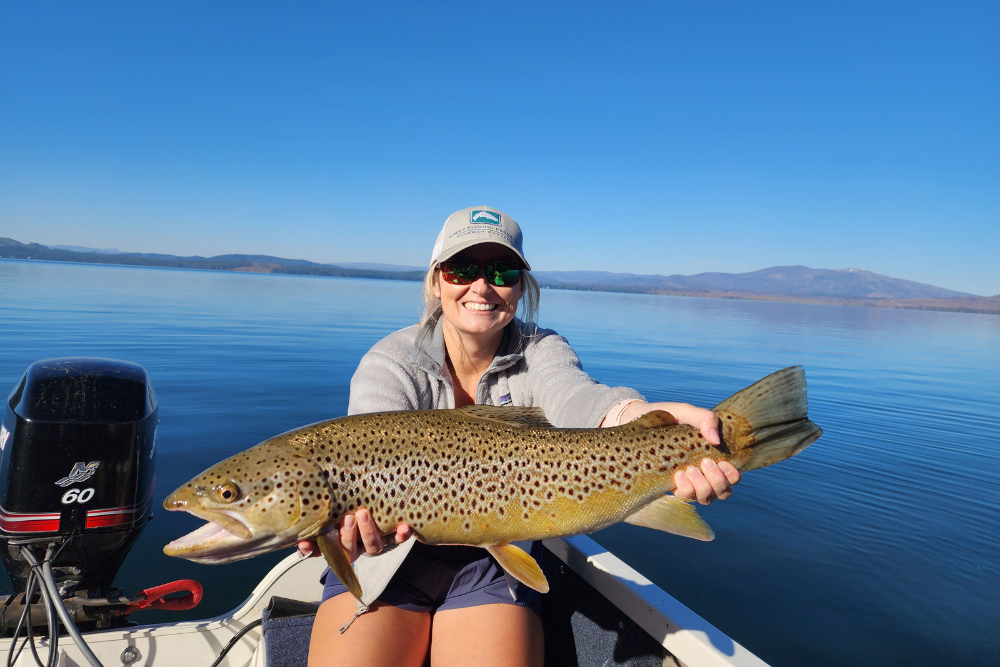
Gear:
- Rod:
9’6” Orvis Recon 6wt. - Reel:
Orvis Hydros III - Lines:
Indicator – Scientific Anglers AMPLITUDE SMOOTH ANADRO INDICATOR – Orange Tip 6wtDry Fly – Scientific Anglers AMPLITUDE SMOOTH TROUT 6wt
Intermediate – Scientific Anglers SONAR STILLWATER CLEAR CAMO 6wt
Sink – Scientific Anglers SONAR STILLWATER SEAMLESS DENSITY 3/5 6wt
- Leader:
Indicator – Scientific Anglers ABSOLUTE INDICATOR/STILLWATER LEADER 12ft. 2X/3XIntermediate/Sink – Scientific Anglers ABSOLUTE FLUOROCARBON LEADER 9ft. (trimmed to 7ft.) 2X/3X.
Dry Fly – Scientific Anglers ABSOLUTE TROUT LEADER 9ft. 2X/3X
Indicators: Hareline Tapered Slip Strike Indicator – Large 1” Orange or Yellow